From Smart Municipalities to Biobank.ro: Egnosis Talks at Saint George Days
For more than a decade, Egnosis and the IT Plus Cluster have been regular organizers of the Észműves Sátor programme — a wordplay inspired by the handmade crafts traditionally showcased during Saint George Days. While the festival celebrates handmade products, Észműves Tent brings forward “brain-made” ideas: knowledge, innovation and professional dialogue that create value for the community in their own right.
This year, on the occasion of the 33rd Saint George Days, we prepared two talks for the programme — both exploring how technology, data and expert knowledge can create real value for communities. One discussion focused on digitalisation in local government, while the other turned to the newly launched Biobank.ro initiative, addressing medical data, artificial intelligence and the social value of biomedical research.
Digitalisation in municipalities – with tools like KLUSA
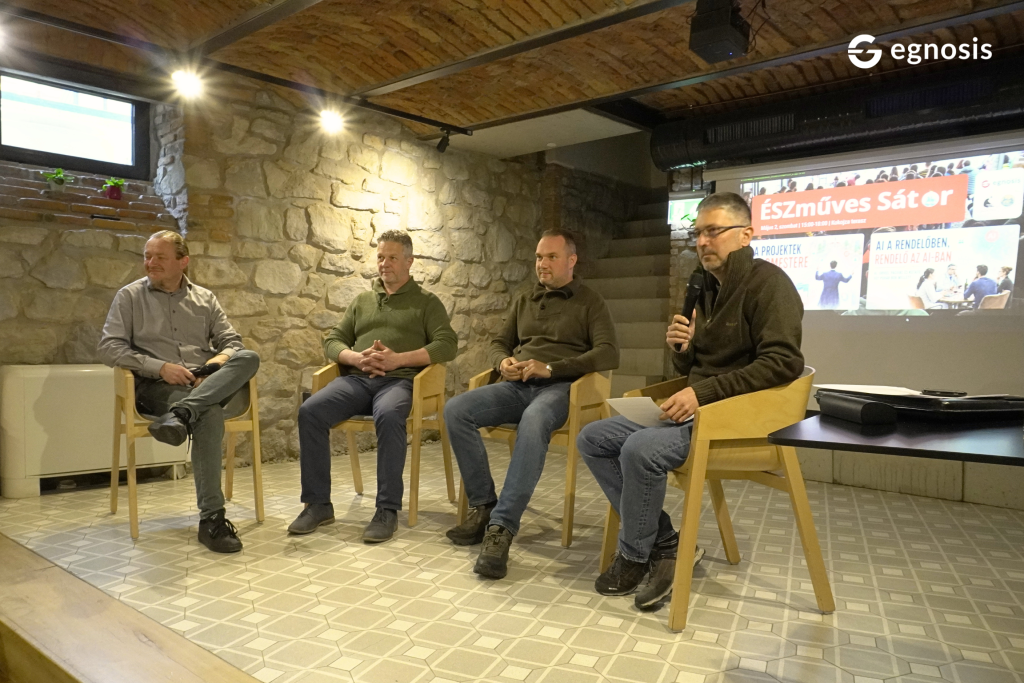
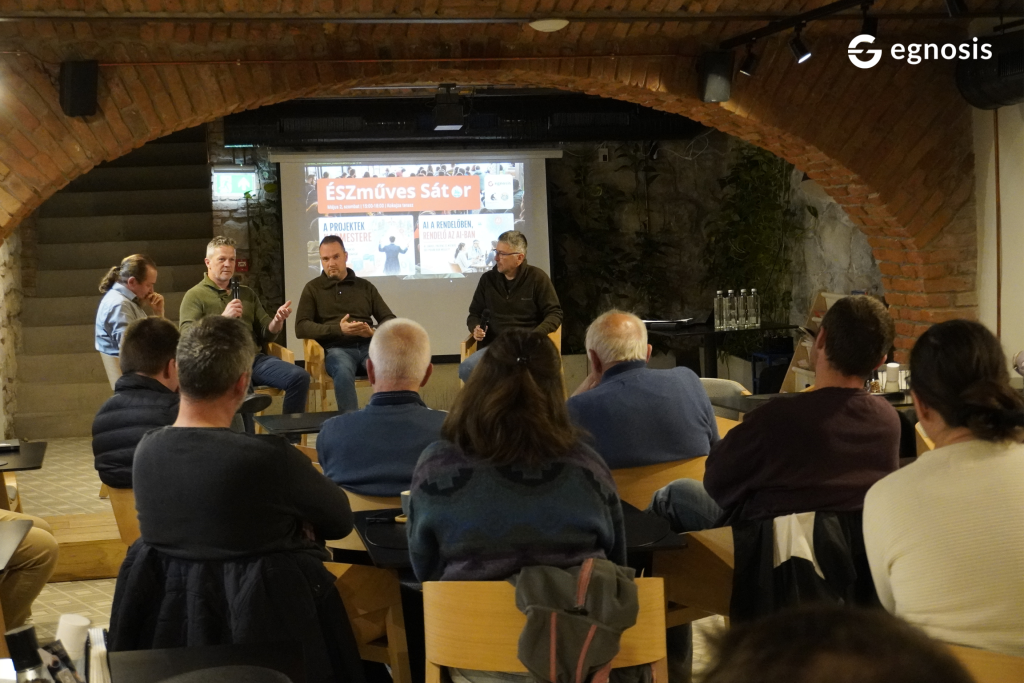
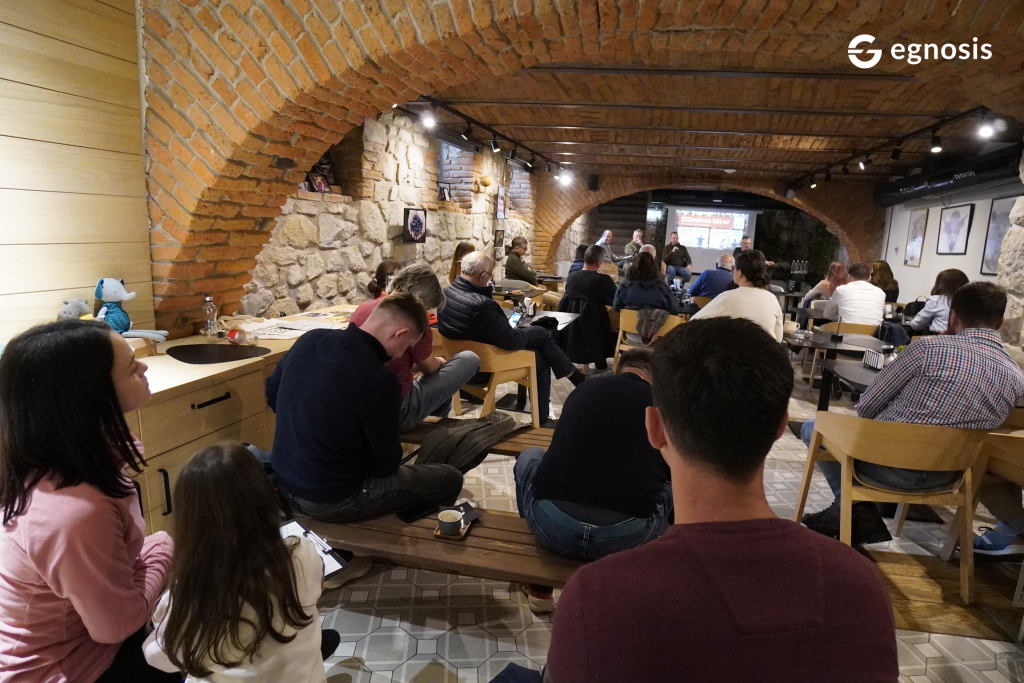
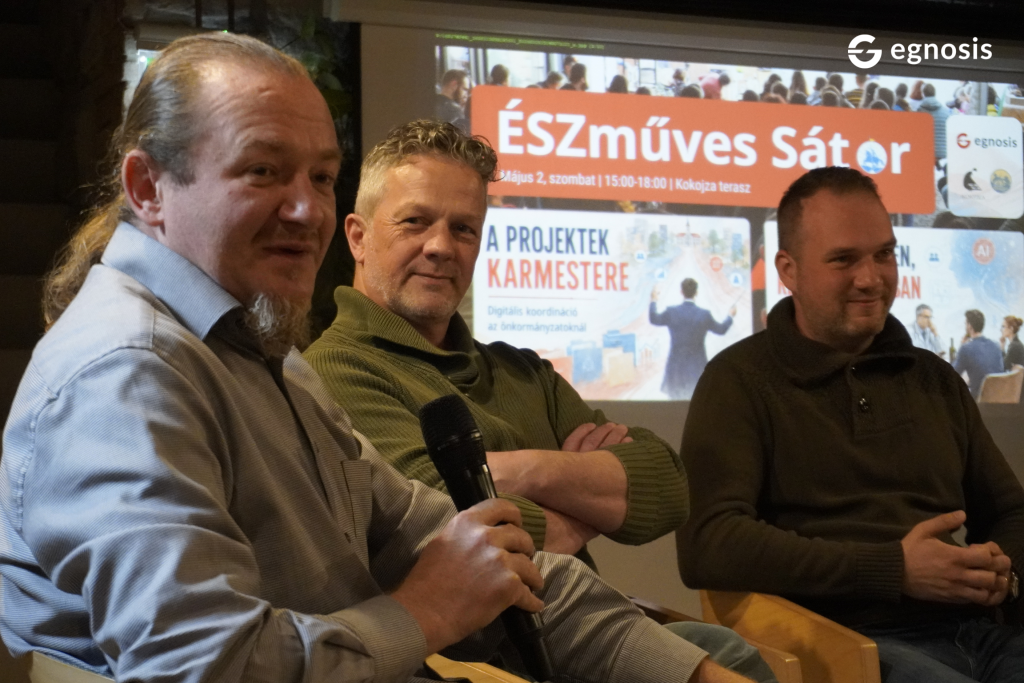
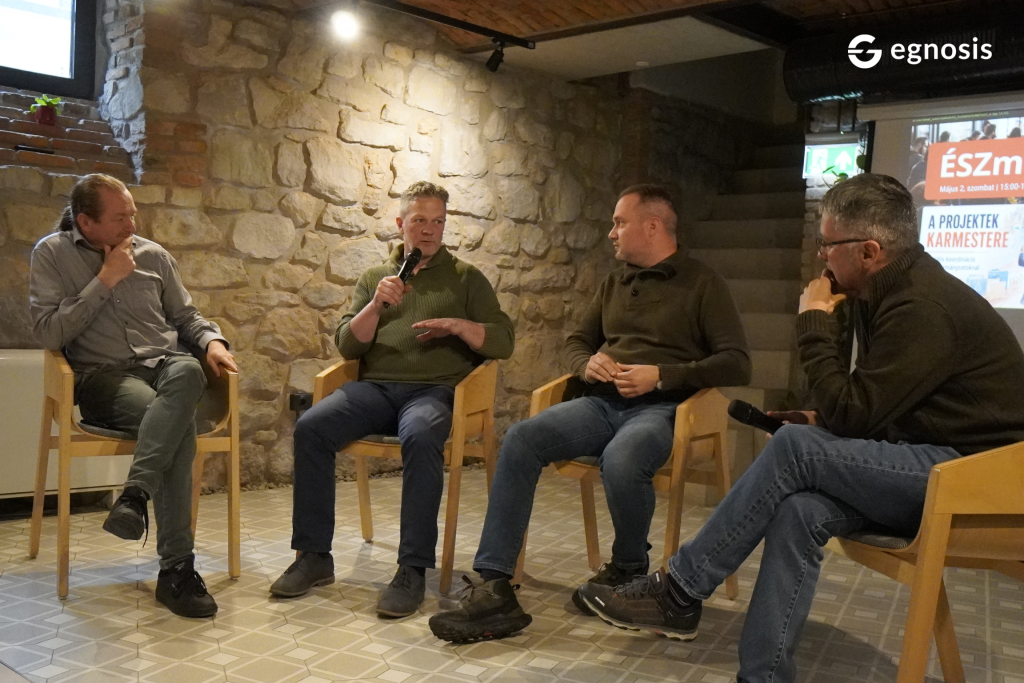
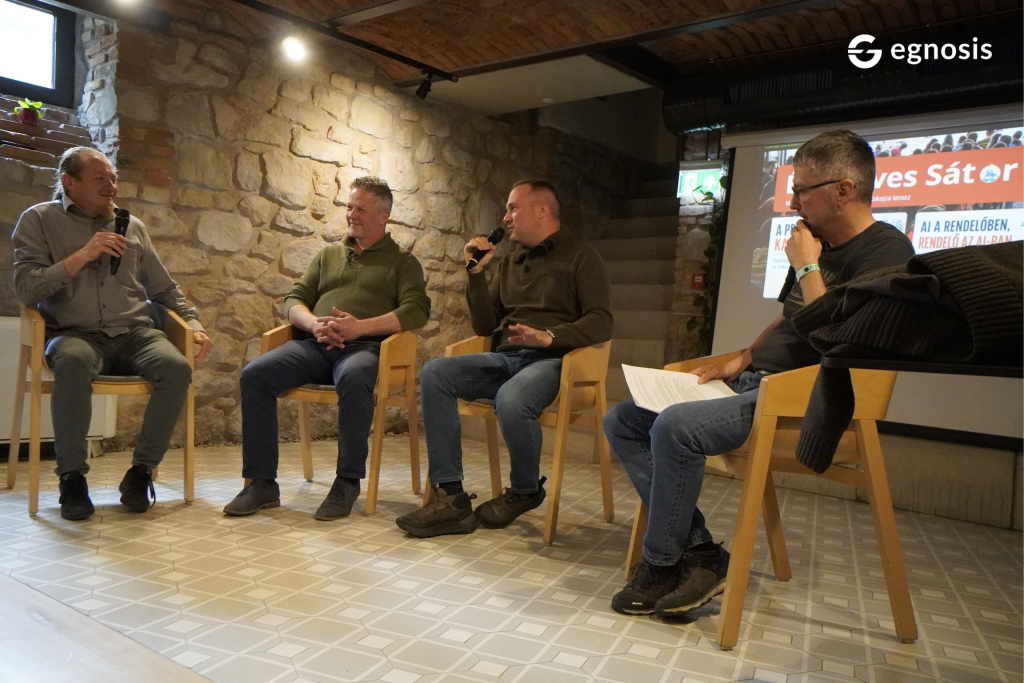
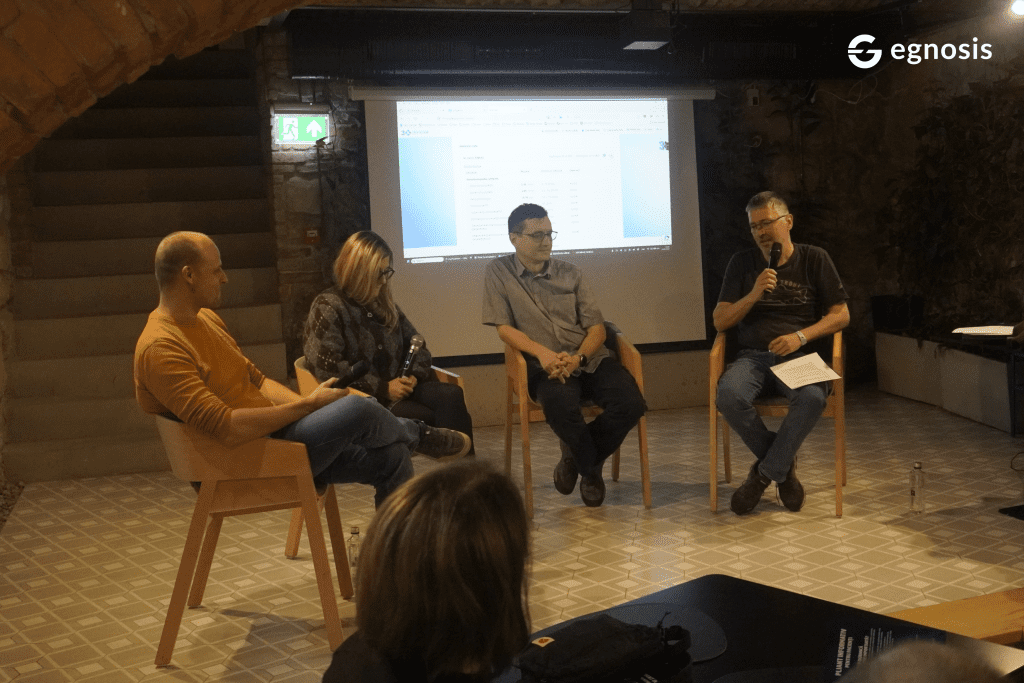
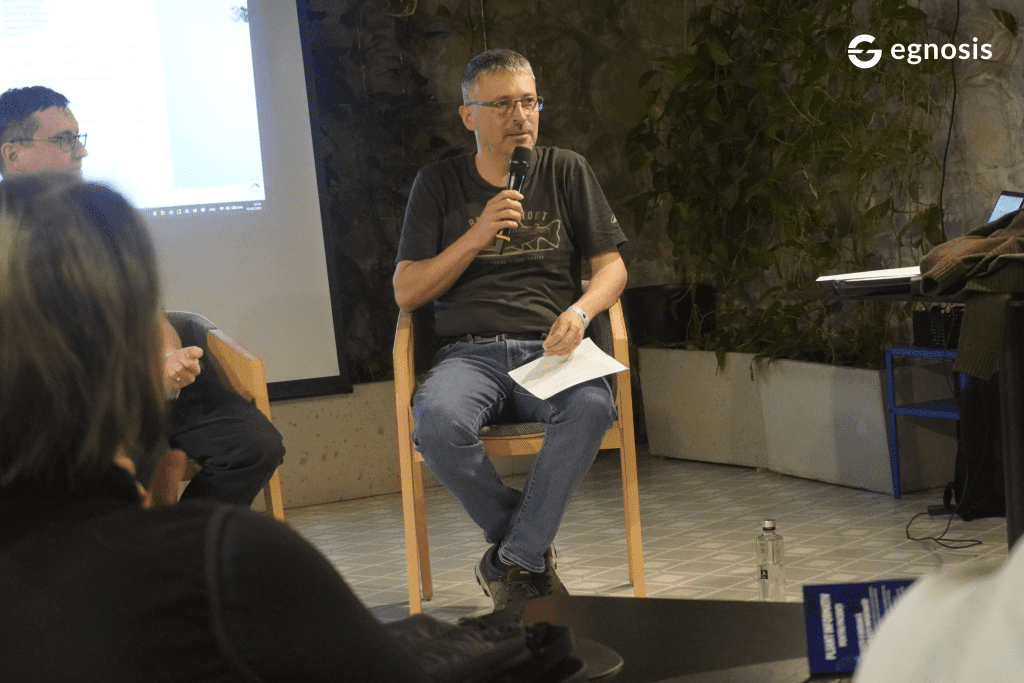
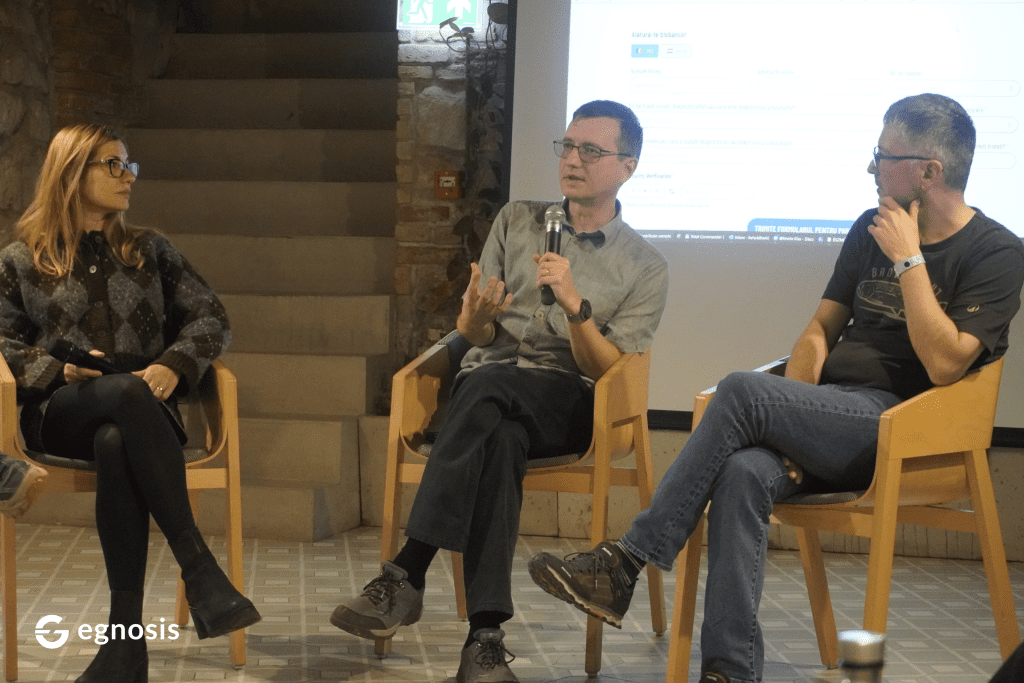
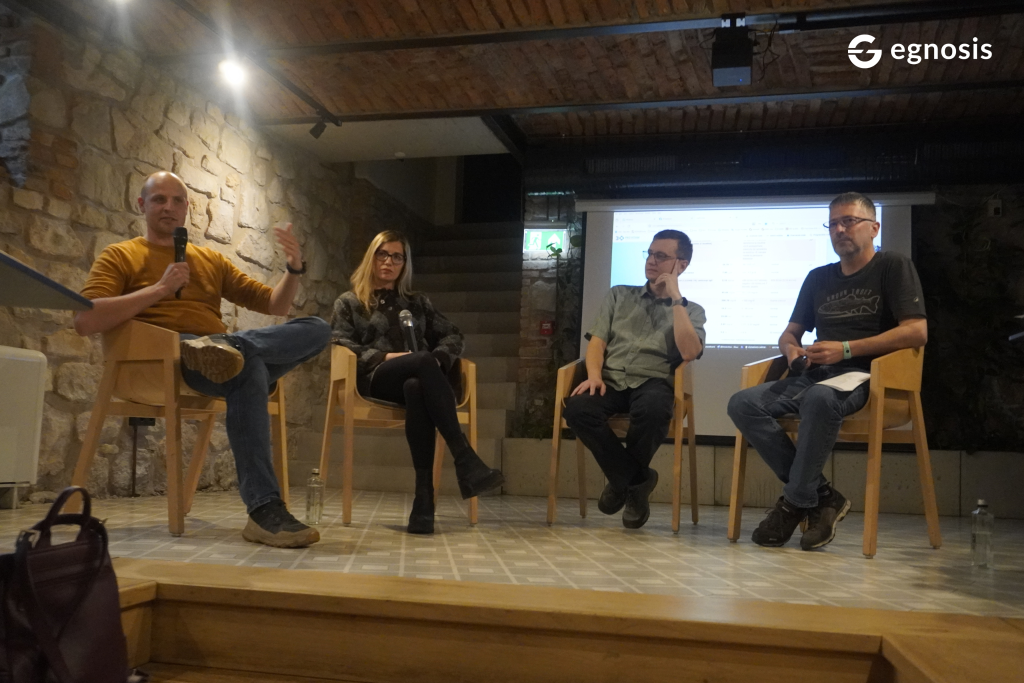
On Saturday, we discussed how digital tools can bring more clarity and structure into one of the most complex areas of municipal work: the coordination of projects, data, deadlines, decisions and responsibilities. The roundtable brought together István Barna Jakab, City Manager of Sfântu Gheorghe, János Benedek-Huszár, Mayor of Baraolt, and Attila Rácz, Managing Director of Magic Solutions. The conversation was moderated by Béla Bihari, Managing Director of Egnosis and Vice President of the IT Plus Cluster.
During the discussion, good practices from the municipalities of Sfântu Gheorghe and Baraolt were presented. Among other topics, the speakers discussed the implementation of the KLUSA multi-project management system and IT infrastructure developments that may not always be visible from the outside but play an essential role in the everyday functioning of modern public administration. Such tools can truly act as “conductors” in the background: helping to coordinate projects, resources, documents, deadlines and decision-making processes in a more transparent and structured way.
Artificial intelligence was also part of the conversation. The participants agreed that AI will inevitably enter the work of local administrations, sooner or later, bringing the need for new skills and competencies. At the same time, the scope, responsibility and practical applicability of AI agents were examined with a healthy dose of skepticism.
The discussion did not avoid the difficult parts either. Bureaucracy, rigid state systems, institutional habits and the lack of digital skills still slow down digital transformation in many places. These are not minor technical details, but real organizational challenges.
However, all speakers and participants agreed on one thing: digitalization is no longer optional. The real question is not whether we need it, but how we can implement it intelligently, gradually and with the involvement of the right experts.
Biobank.ro – from personal health data to shared research value
The second talk, held under the playful title “Dr. AI is in”, opened with a telling audience response: almost everyone had already used AI tools for health-related questions or had entered some form of medical information into ChatGPT — despite the fact that ChatGPT itself does not guarantee GDPR-compliant handling of personal medical data.
From a medical perspective, Dr. Katalin Dallos-Fejér noted that AI agents can be useful in the right context, especially when users know how to ask the right questions. However, medicine is not built on data alone. Seeing, hearing and examining the patient remain essential parts of diagnosis — this is the added value that only a physician can provide. At the same time, doctors are increasingly using AI, making high-quality medical data even more important for research. Today’s structured datasets may support tomorrow’s discoveries, from better diagnostics to routine screening programs that could help prevent serious diseases.
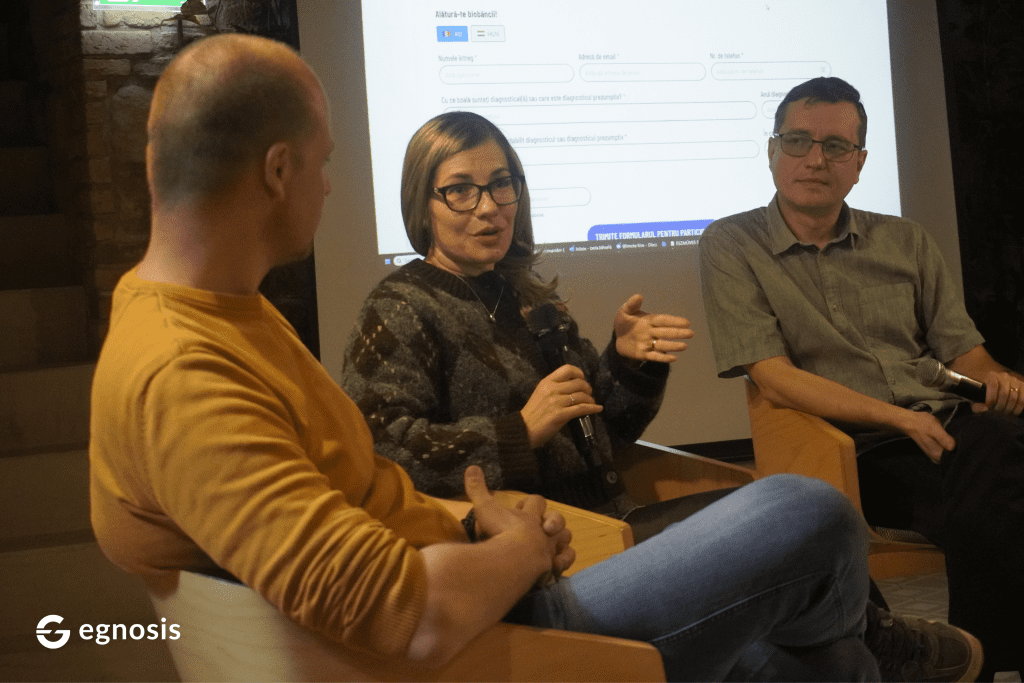
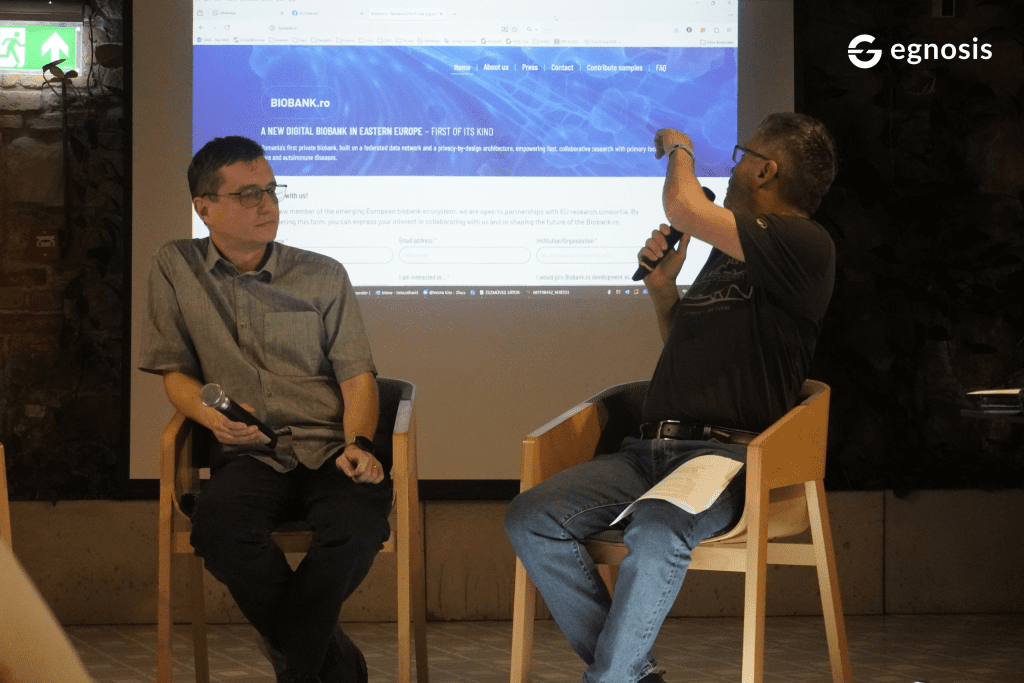
Dr. Szilárd Fejér, chemist and Head of the Pro-Vitam Research Group, addressed the research side of the issue. The lack of accessible, well-structured data — or the fact that existing data is scattered across different systems and institutions — significantly slows down scientific work, not to mention the additional burden of bureaucracy. In this context, he presented the concept of Biobank.ro, Romania’s first private biobank, where a voluntary screening program has already been launched for patients diagnosed with rare or autoimmune diseases.
Béla Bihari, the initiator and project leader of the Biobank.ro concept, added the international experience behind the initiative, explaining why such an infrastructure is both timely and necessary. Dániel János Dallos, the project’s tech lead, presented lessons learned from previous health data projects and how they contributed to the biobank’s architectural backbone. He also outlined the path of medical data from collection to research use, with full attention to data security for both patients and healthcare providers, in line with the relevant EU regulations and requirements.
The screening programme has already started. The focus on rare and autoimmune diseases is deliberate: these are areas where data is especially limited, while diagnosis often takes years for individual patients. More information is available on the Biobank.ro website, where patients interested in voluntary blood donation, as well as anyone looking for answers about the biobank, can find further details.
Technology only matters when it creates trust and value
Both conversations pointed in the same direction: whether we speak about municipal project management or biomedical research, technology is not an end in itself. Its real value lies in creating more transparent systems, better decisions, safer data use and stronger collaboration between experts, institutions and communities.
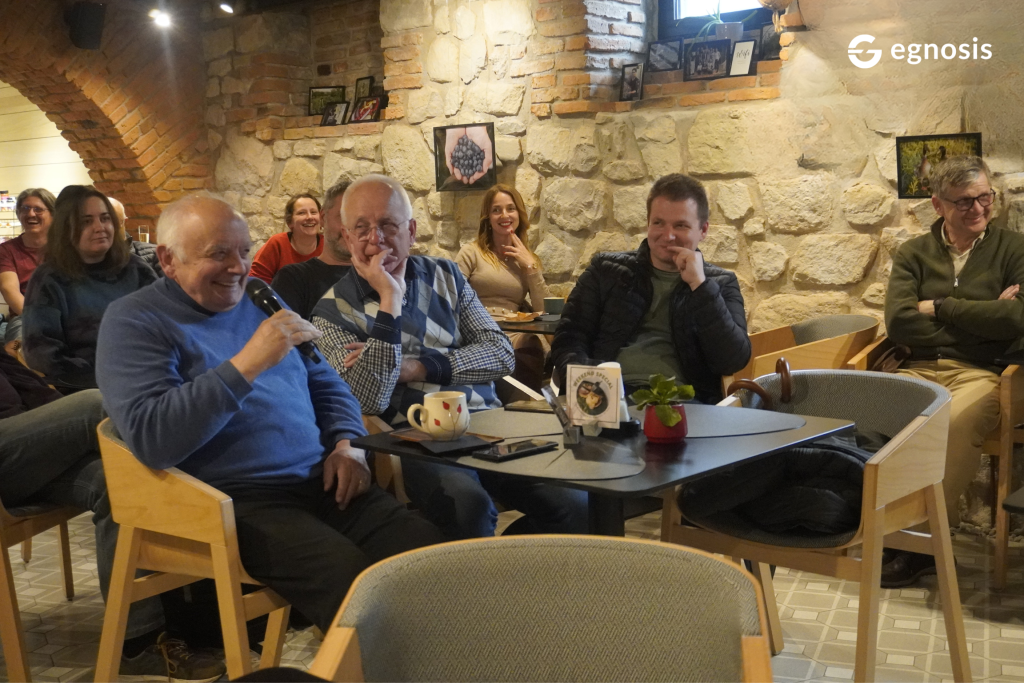
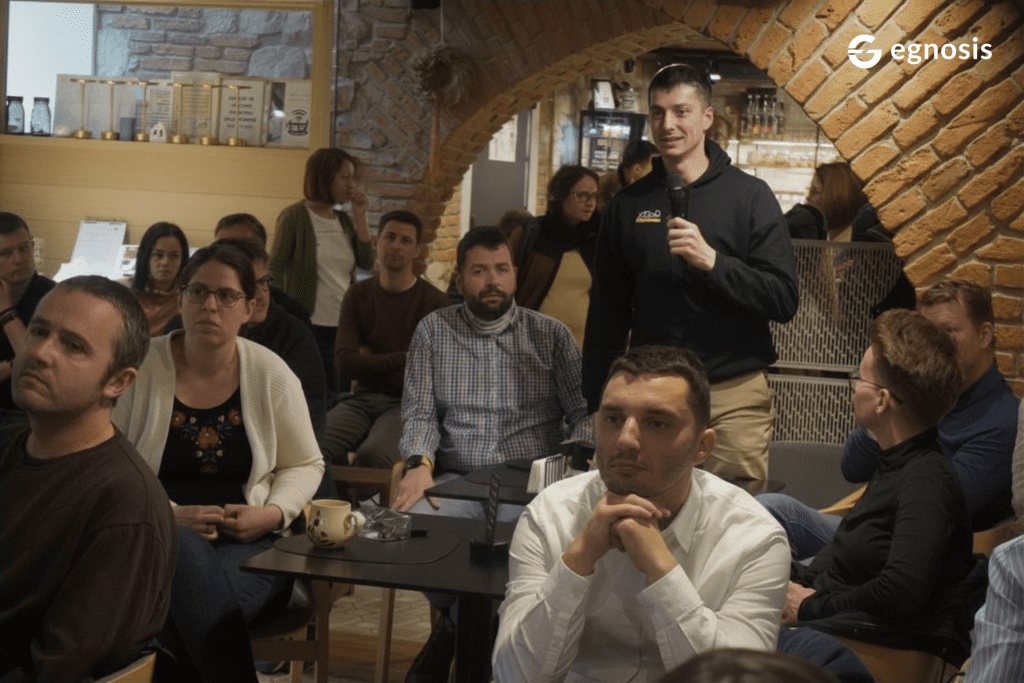
Thank you to everyone who joined the discussions, asked questions, shared their thoughts or simply listened with openness. It was encouraging to see that complex topics — from municipal digitalization to AI, health data and biobanking — can be discussed in an honest, practical and accessible way.